 |
 |
 |
 |
 |
 |
| |
|
|
|
|
|
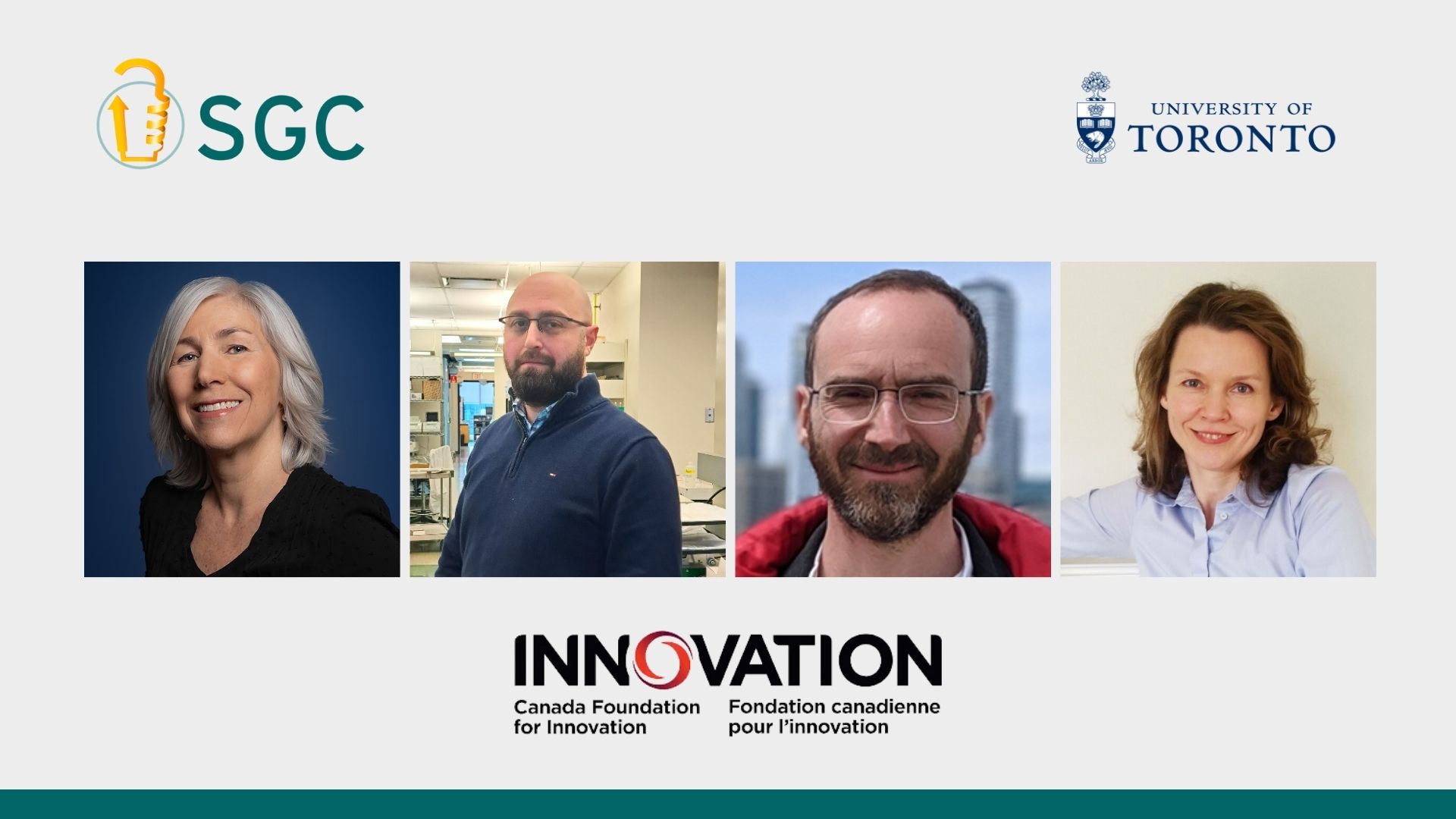
Toronto, March 27, 2024 – The Structural Genomics Consortium (SGC) is pleased to announce Dr. Hui Peng has joined the SGC-Toronto as a Principal Investigator.
Dr. Hui Peng, PhD, is an Associate Professor in the Department of Chemistry at the University of Toronto. He is an internationally recognized expert in analytical and environmental chemistry and the recipient of multiple awards, including the Ontario Early Researcher Award (2022), the James J. Morgan Early Career Award of the American Chemical Society (ACS, 2023), Canadian Society for Chemistry (CSC) Early Career Research Award (2024).
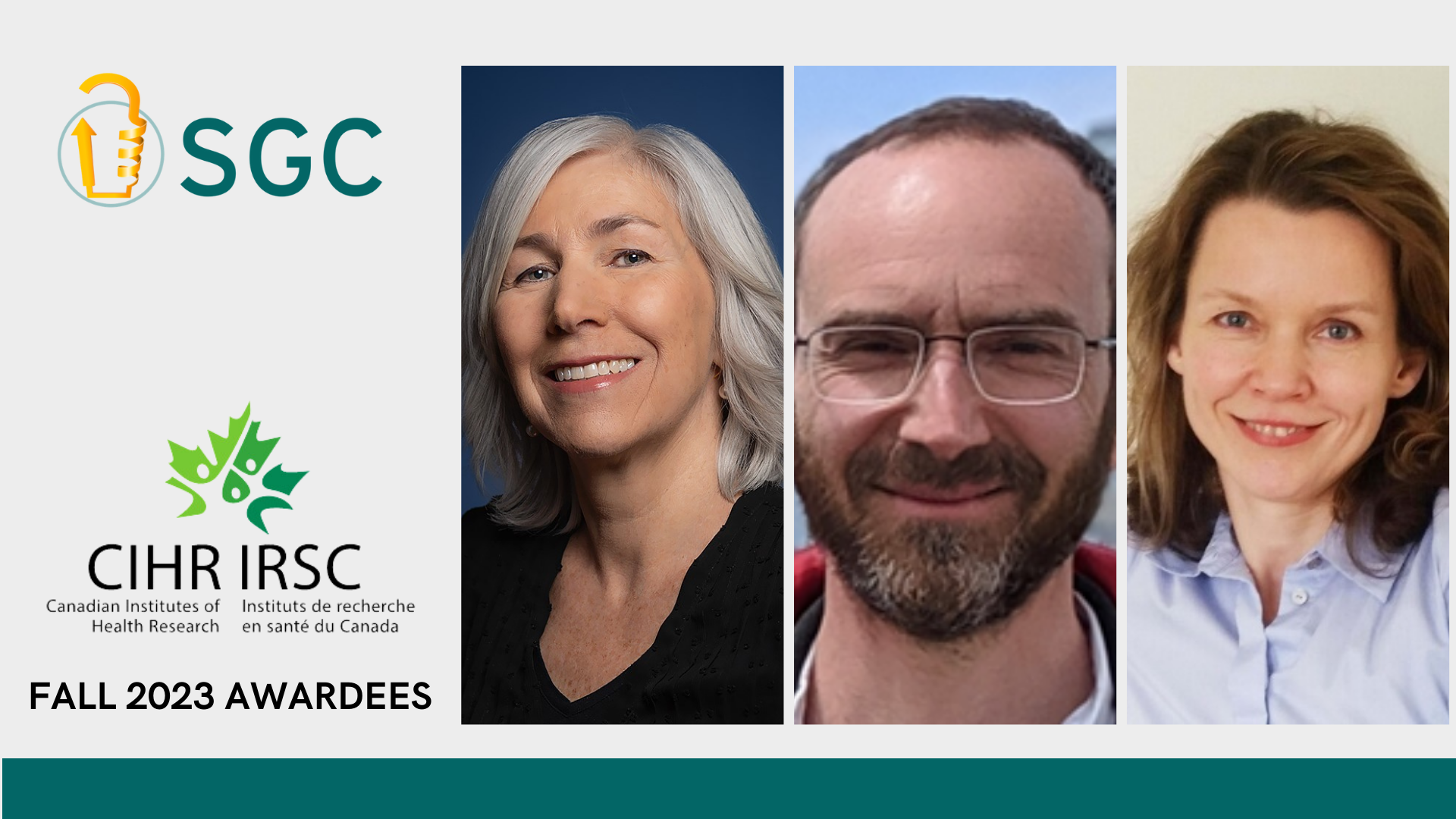
SGC's CIHR Award recipients. (L-R): Drs. Cheryl Arrowsmith, Matthieu Schapira, and Dalia Barsyte-Lovejoy.
The Canadian Institutes of Health Research (CIHR) has recently released the results of its Fall 2023 Project Grant funding competition. This competition aims to provide financial support to projects that will advance knowledge, research methodologies, patient care, and overall health outcomes.
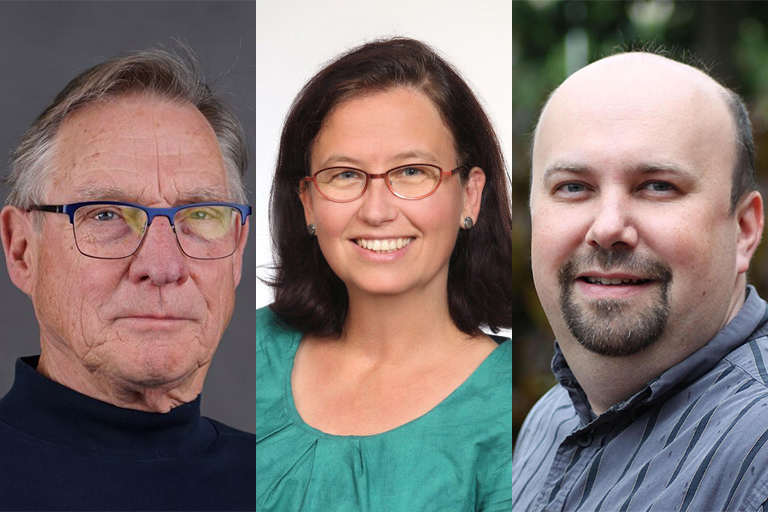
Left to right: John Moult, Judith Guenther, Okexandr Isayev
Can computational chemistry predict medicine-like molecules for any protein?
Maybe, but despite the ability of machine learning to identify such promising compounds, finding a reliable algorithm to select, design and rank these molecules remains a daunting challenge.
Frankfurt, February 26, 2024– The Structural Genomics Consortium (SGC) at Goethe University Frankfurt am Main has secured a significant €11.8 million in funding from the German Cancer Aid for the development of new, targeted cancer drugs, with a particular emphasis on rare tumor diseases.
[Toronto, January 10, 2024] - Professor Benjamin Haibe-Kains has joined the Structural Genomics Consortium as the Head of Data Science to further support SGC’s ambition to generate high-quality and reproducible data. In his new role, Dr. Haibe-Kains will establish a robust mechanism to ensure transparency, interoperability, and accessibility of SGC’s data for machine learning and pattern recognition.
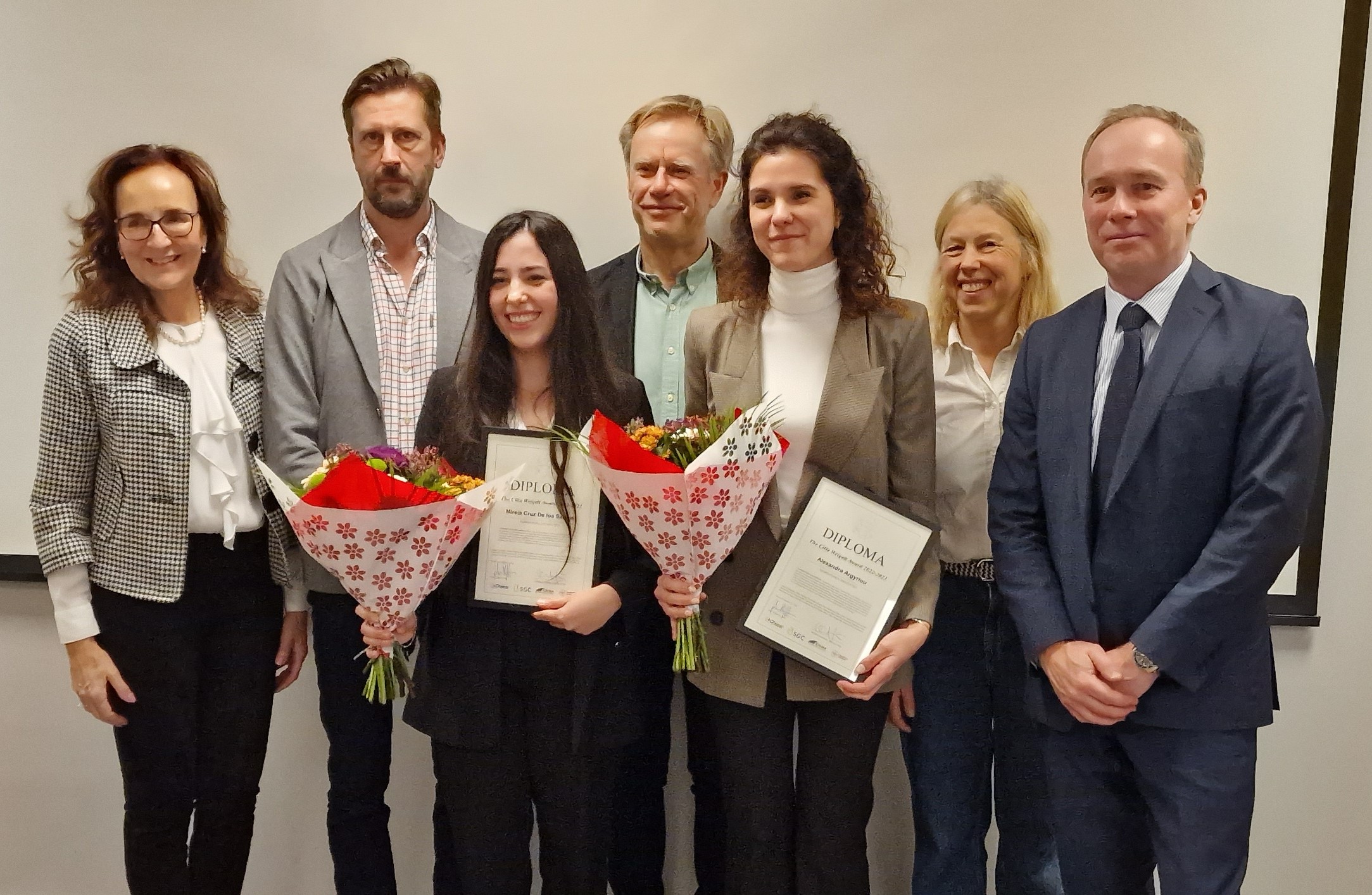
The Cilla Weigelt Awards for 2022 and 2023 were recently presented at the Chiesi premises on the Karolinska Institutet campus, honoring outstanding achievements in rare disease research. Established in memory of Dr. Cilla Weigelt, the Cilla Weigelt Award aims to encourage and support doctoral students at Swedish universities focusing on identifying molecular mechanisms relevant to rare and under-treated diseases.
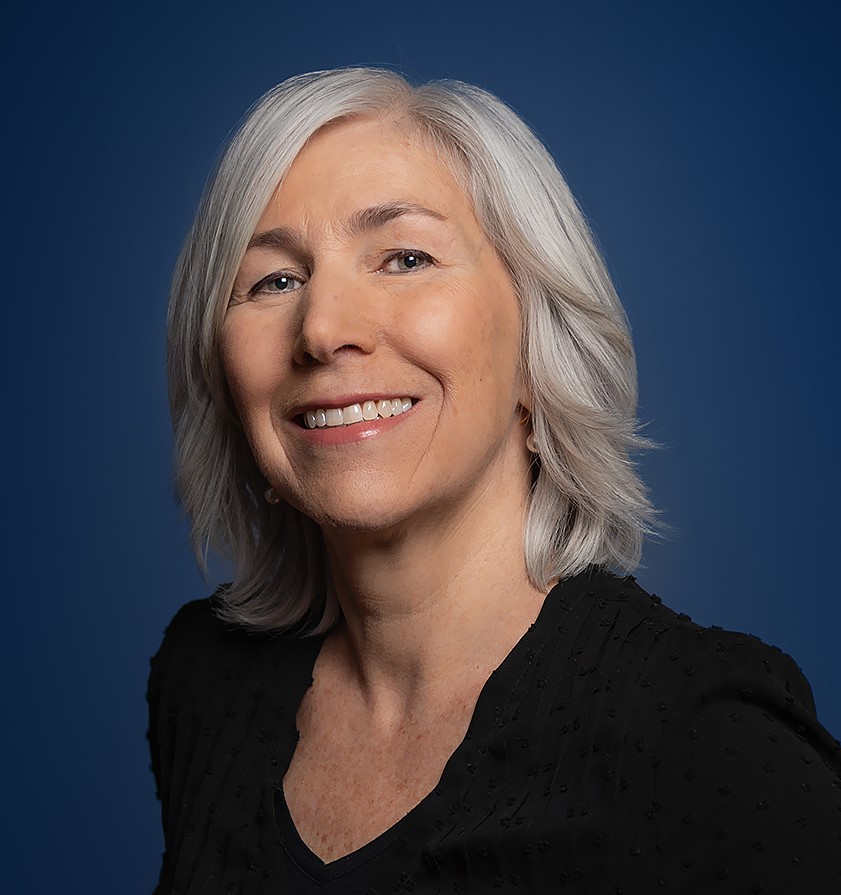
Cheryl Arrowsmith, Chief Scientist of the Structural Genomics Consortium (SGC), Senior Scientist at the Princess Margaret Cancer Centre, and Professor at the Department of Medical Biophysics at the University of Toronto, has been honoured by Clarivate as one of the Highly Cited Researchers for 2023.
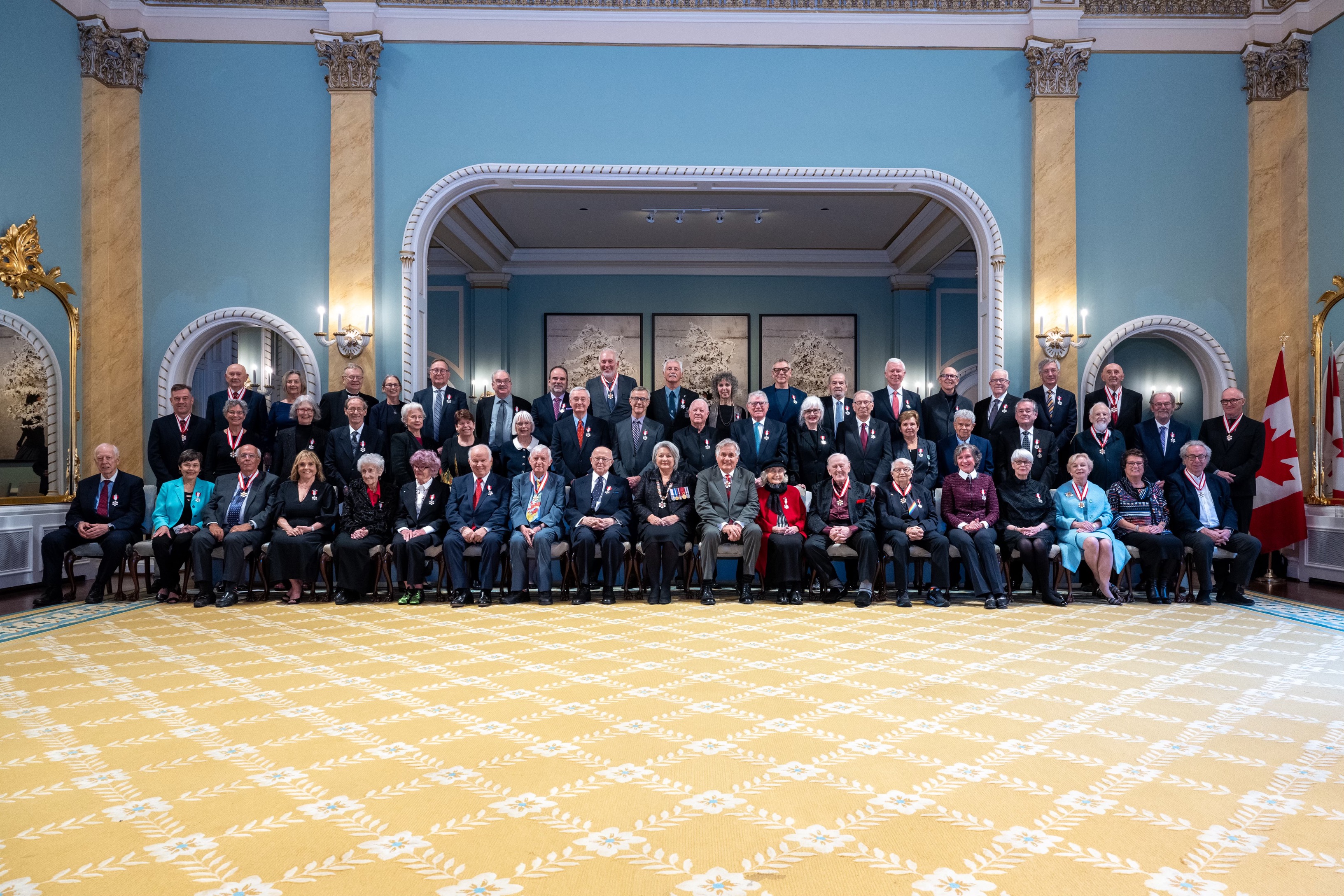
Government General Mary Simon has announced 53 new Order of Canada appointments- one of Canada’s highest honours. This prestigious recognition celebrates individuals from diverse backgrounds for their outstanding contributions to Canada.
Established in 1067, the Order of Canada acknowledges remarkable achievements, dedication to the community and service to the nation, with over 7,600 people spanning various sectors invested in making a difference in Canada.
