
Enabling pharmacological validation
Identifying a target is only the first step. The central question is whether it can be modulated in a precise and controlled way. To address this, the Women’s Health Initiative develops chemical probes, selective small molecules that enable direct characterization of target function in biological systems. These tools make it possible to determine whether modulating a target can influence fertility, expand the understanding of non-hormonal contraceptive targets and establish the basis for new, effective, and accessible contraceptive options.
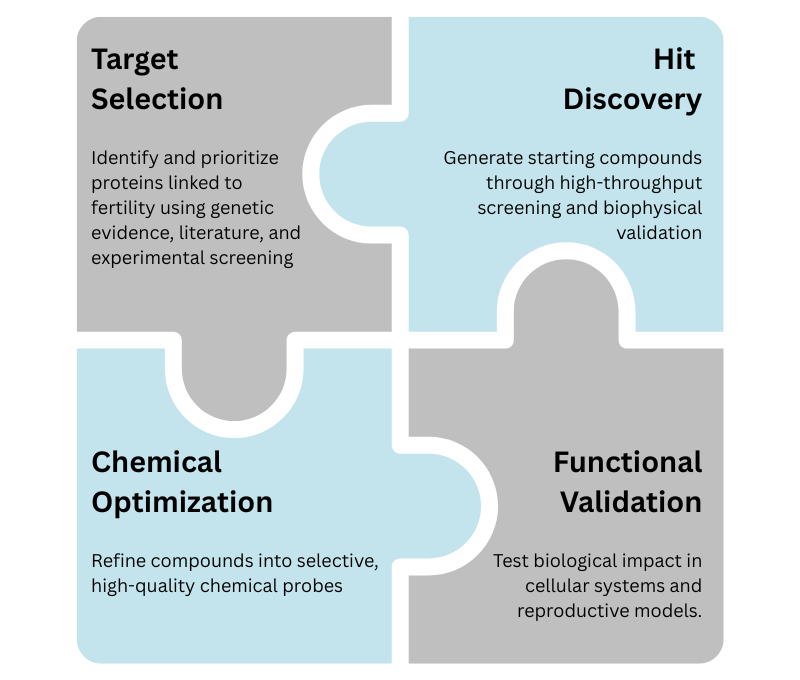
The Women’s Health Initiative brings together the capabilities required to validate new targets:
- identification of targets based on genetic and biological evidence
- discovery of molecules that bind and modulate these targets
- optimization into selective chemical probes
- testing in cellular and reproductive models
This coordinated framework enables multiple targets to be explored in parallel, supporting a systematic approach to discovery.
The SGC Women’s health initiative: a flagship program
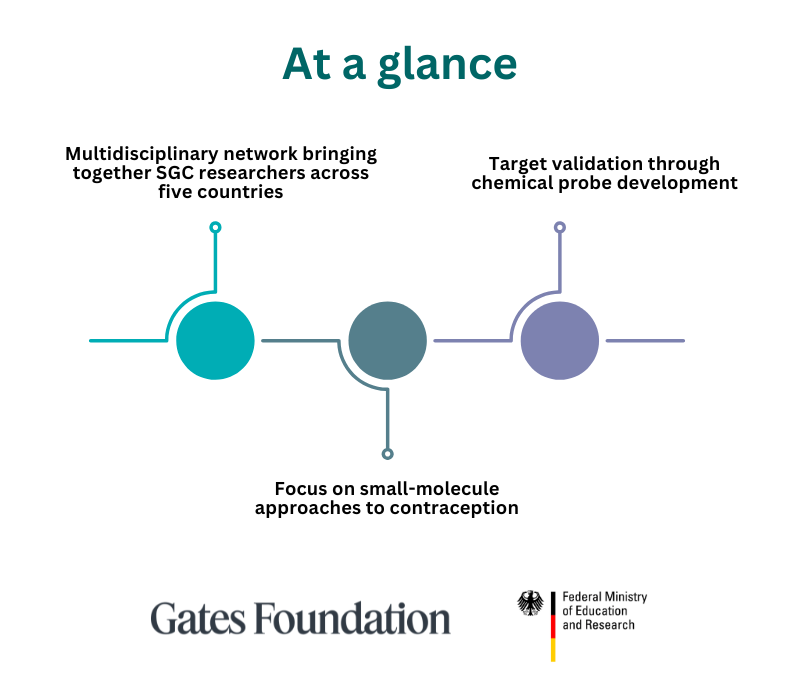
The non-hormonal contraceptive research is a core program within the initiative. Funded by the Gates Foundation and the German Federal Ministry of Education and Research, the collaborative research network focused on discovering and validating new drug targets for non-hormonal contraception.
By integrating expertise across reproductive biology, chemical biology, structural biology, and medicinal chemistry, across three continents and five countries, the program aims to build the tools needed to test new contraceptive strategies and enable future therapeutic development. The initiative is led by Claudia Tredup (Goethe University Frankfurt) and the team includes principal investigators Rachel Harding (University of Toronto), Aled Edwards (University of Toronto), Tim Willson (University of North Carolina at Chapel Hill), and Nicola Burgess-Brown (University College London).