18.12.2013

Bayer HealthCare to Join Not-For-Profit SGC to Accelerate Research in Epigenetics

by: SGC

Toronto, December 18, 2013 – Bayer Inc. is pleased to announce that Bayer HealthCare has joined the Structural Genomics Consortium (SGC), a not-for-profit, public-private partnership with active research facilities at the Universities of Toronto and Oxford, UK. Bayer will support funding the consortium to accelerate precompetitive drug research in the areas of protein sciences and epigenetics. Furthermore, Bayer will provide a subset of its compound library for screening to the SGC and will also conduct the chemical work to identify probes.

PFI-3 A selective chemical probe for SMARCA bromodomains

This probe is available from Cayman Chemical, Sigma and Tocris

overview
Probe Negative control


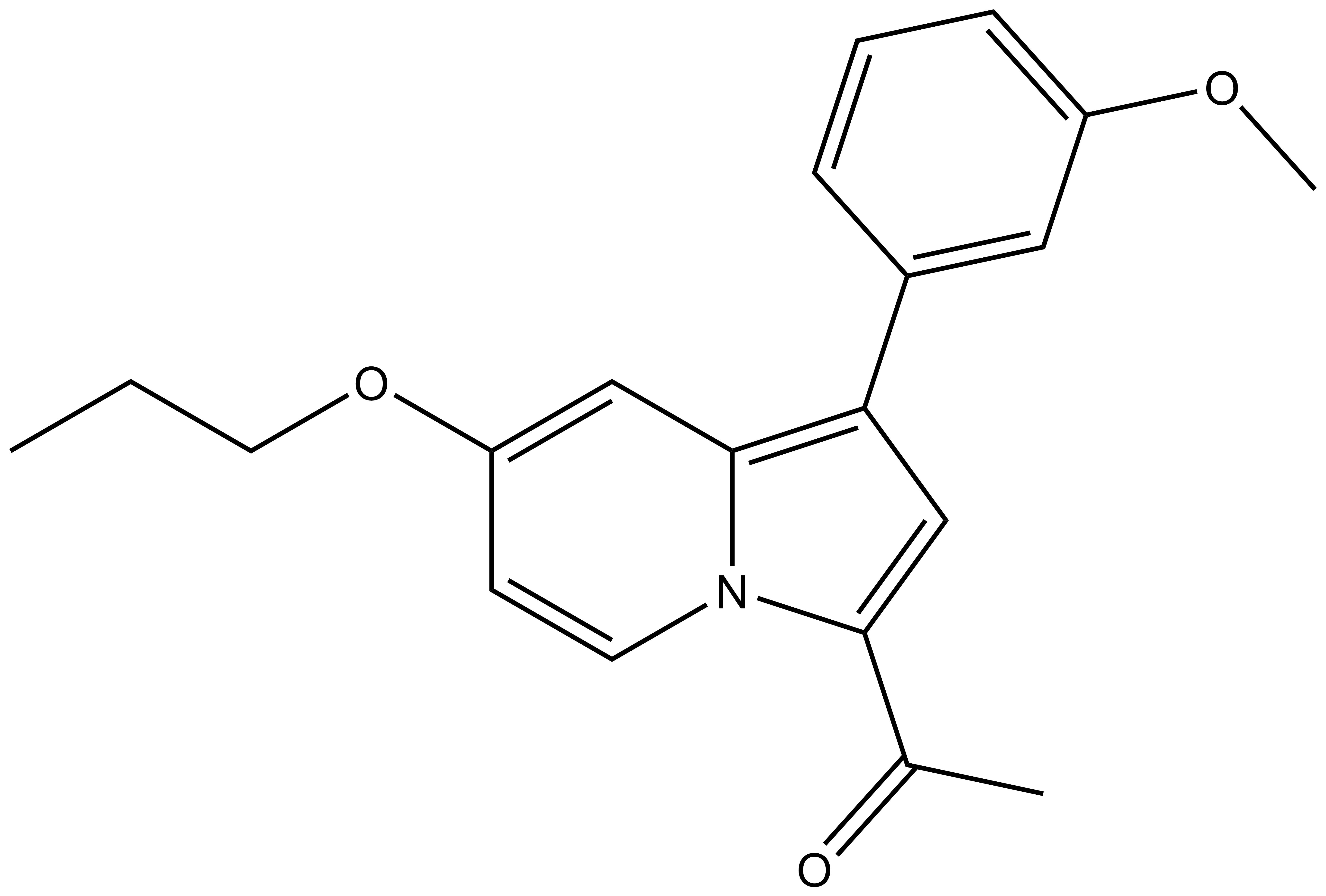
PFI-3


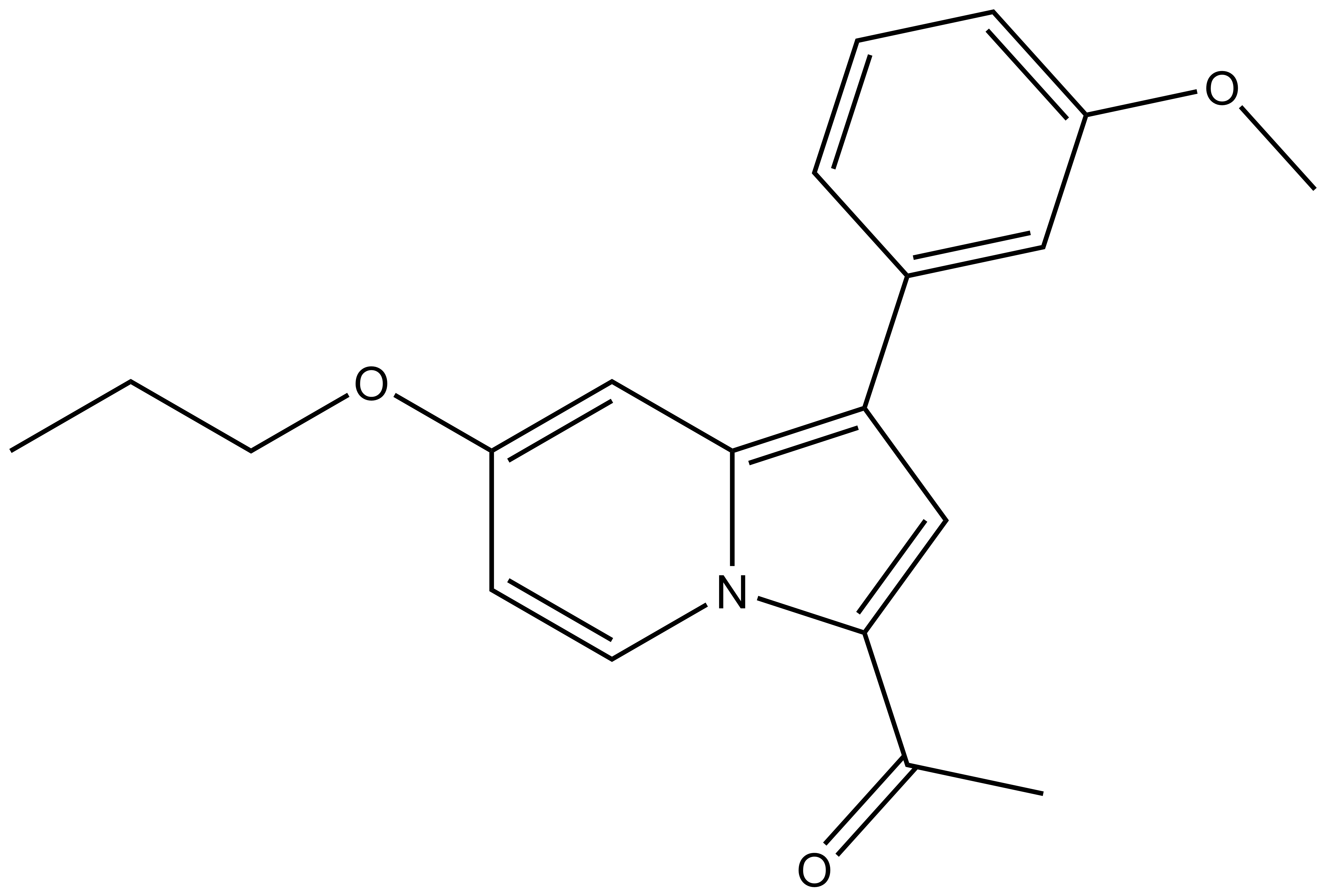
PFI-3oMet

In vitro Potency
AssayKd/IC50 (nM)
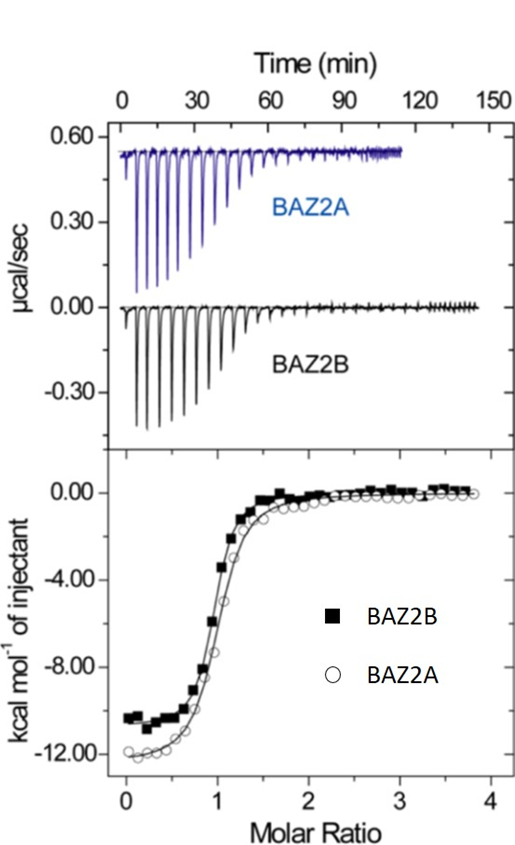
SMARCA4 (ITC)

89

PB1(5) (ITC)

48

SMARCA4 (SWI/SNF related, Matrix associated, Actin dependent Regulator of Chromatin, subfamily A, member 4), also known as BRG1 (Brahma-Related Gene 1), is part of the SWI/SNF (SWItch/Sucrose NonFermentable) family of proteins. Multiple transcript variants encoding different isoforms have been found for this gene in normal tissue as well as in cancer. SMARCA4 and the related protein SMARCA2 (BRM, BRahMa) contain a bromo and helicase domain and both proteins are central components of the large ATP-dependent SNF/SWI chromatin remodelling complex, which plays a key role in chromatin remodelling and transcription control. PB1 (PolyBromo 1) can also be part of the SWI/SNF complex.
Loss of function of SMARCA4 and components of SWI/SNF has been linked to cancer development suggesting a tumour suppressor function for BRG1. SMARCA4 has also been shown to interact with the breast cancer gene BRCA1 (BReast CAncer 1, early onset), as well as to regulate the expression of the tumorigenic protein CD44.

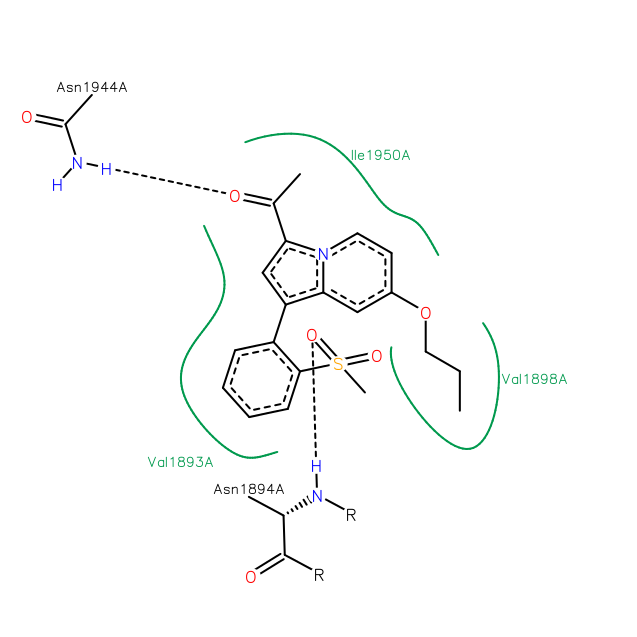
We have developed an inhibitor, PFI-3, against the SMARCA2/4 and PB1(5) bromodomains.

properties
(2E)-1-(2-hydroxyphenyl)-3-[(1R,4R)-5-(pyridin-2-yl)-2,5-diazabicyclo[2.2.1]heptan-2-yl]prop-2-en-1-one
Click here to download SDF file
Physical and chemical properties
Molecular weight321.4
Molecular formulaC 19H 19N 3O 2
IUPAC name(2E)-1-(2-hydroxyphenyl)-3-[(1R,4R)-5-(pyridin-2-yl)-2,5-diazabicyclo[2.2.1]heptan-2-yl]prop-2-en-1-one
logP (ChemBioDraw Ultra)2.39
PSA (ChemBioDraw Ultra)56.14
Storage-20°C as powder. NB making aliquots rather than freeze-thawing is recommended
DissolutionSoluble in DMSO at least up to 10mM
Stability* at 37°Ct 1/2 > 15 days
Stability* at 20°Ct 1/2 > 200 days

*as measured by LCMS

  • SMILES:
  • PFI-3: OC1=CC=CC=C1C(/C=C/N2[C@@H]3C[C@H](C2)N(C4=NC=CC=C4)C3)=O
  • PFI-3oMet: COC1=CC=CC(C(/C=C/N2[C@H](C3)CN(C4=NC(NCC#C)=CC=N4)[C@H]3C2)=O)=C1O
  • InChI:
  • InChI=1S/C19H19N3O2/c23-17-6-2-1-5-16(17)18(24)8-10-21-12-15-11-14(21)13-22(15)19-7-3-4-9-20-19/h1-10,14-15,23H,11-13H2/b10-8+/t14-,15-/m1/s1
  • InChIKey:
  • PFI-3: INAICWLVUAKEPB-QSTFCLMHSA-N
  • PFI-3oMet: SLDSPTPDLGRIQU-ZVYLKZBJSA-N
selectivity profile

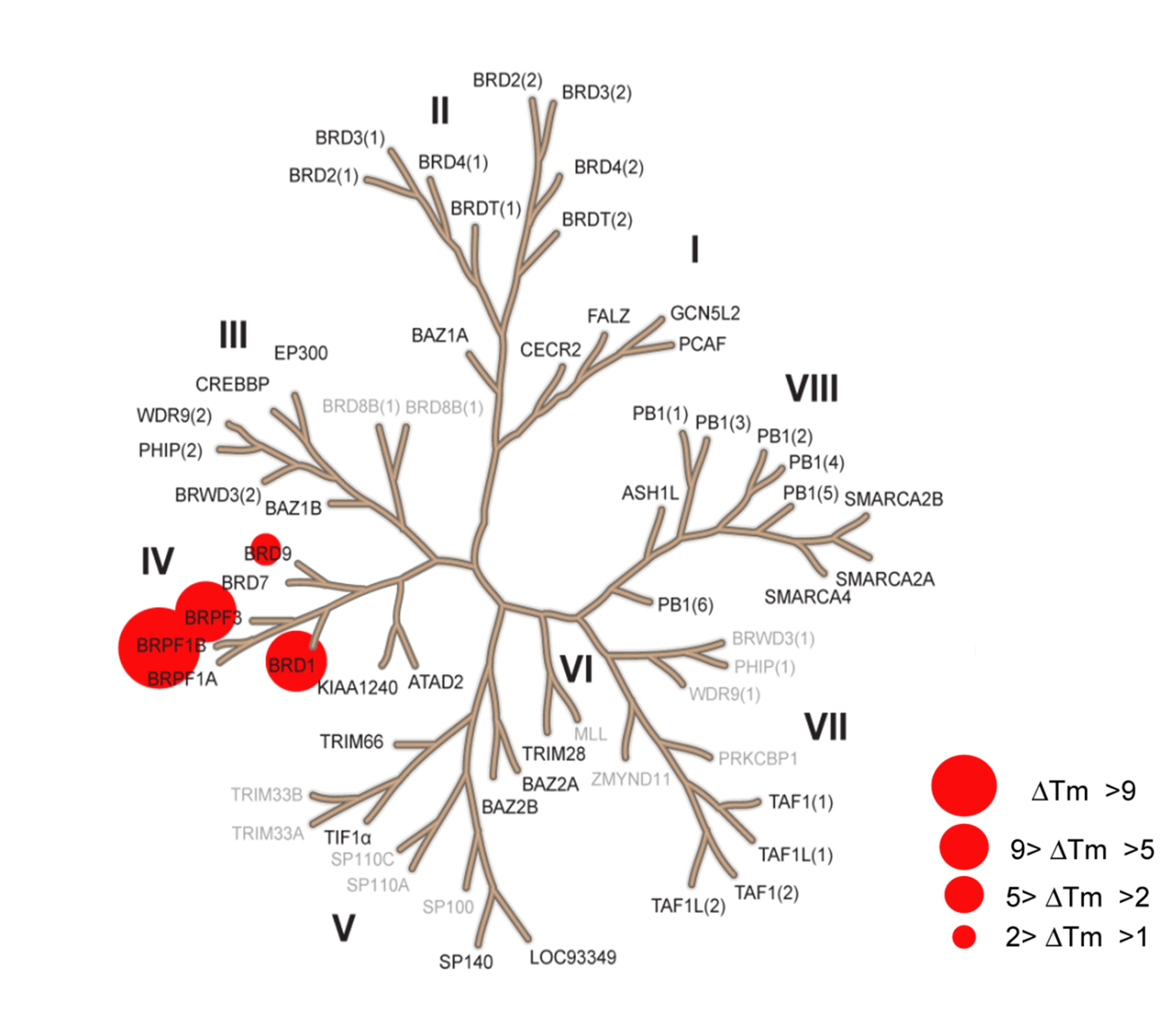
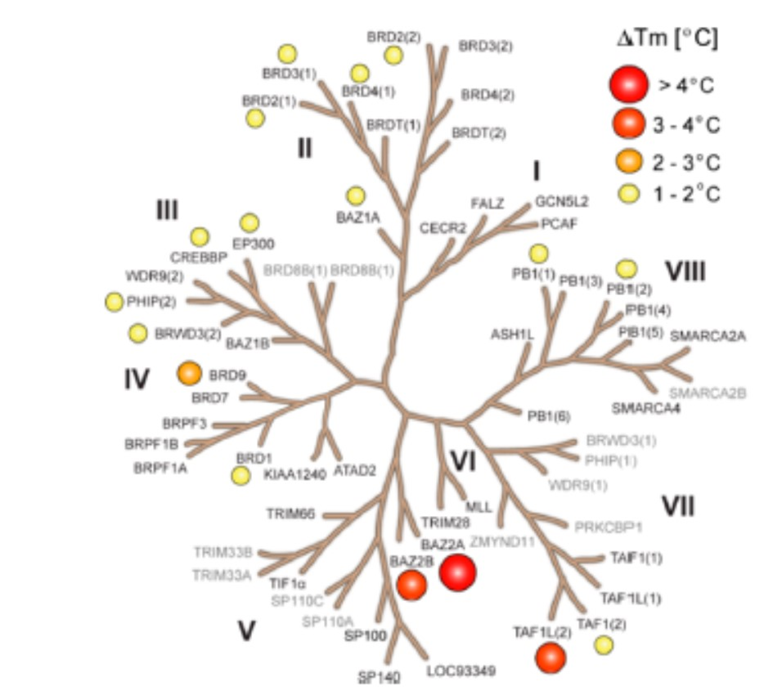
PFI-3 only shows a significant Tm shift with PB1(5) and SMARCA2/4. No interaction was observed with PB1(2-4), and there was no cross-reactivity in a kinase panel of 36 kinases.

Selectivity
Bromodomains
TargetTm shift °C @ 10 µM
SMARCA26.4
SMARCA45.1
PB1 1st Bromodomain-0.5
PB1 2nd Bromodomain1.1
PB1 3rd  Bromodomain0.9
PB1 5th Bromodomain7.5
PB1 6th Bromodomain0.4
PCAF0.5
BRD4 1st Bromodomain0.3
BRD4 2nd Bromodomain0.4
CREBBP-0.0
BRD10.0
TIF1alpha0.7
TRIM2B0.3
TAF1L 1st Bromodomain0.2
TAF1L 2nd Bromodomain0.3
Other proteins
Invitrogen kinase panelNo activity
in vitro potency
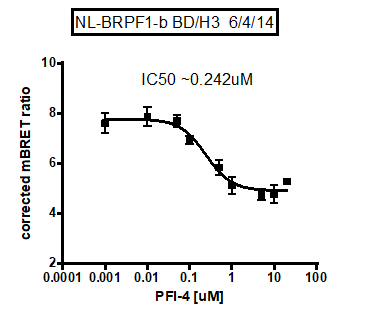
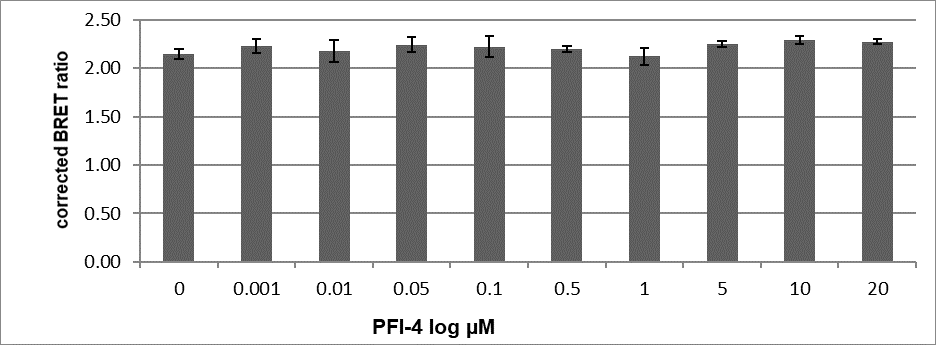
cell based assay data
Selectivity
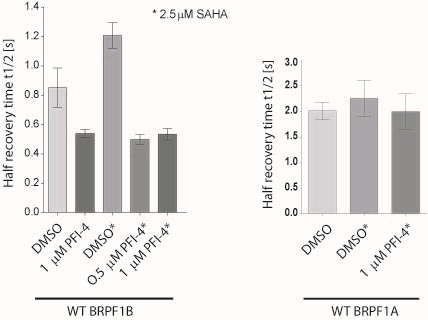
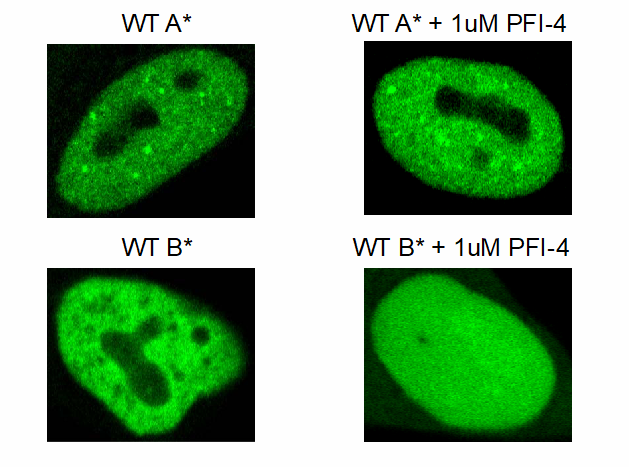
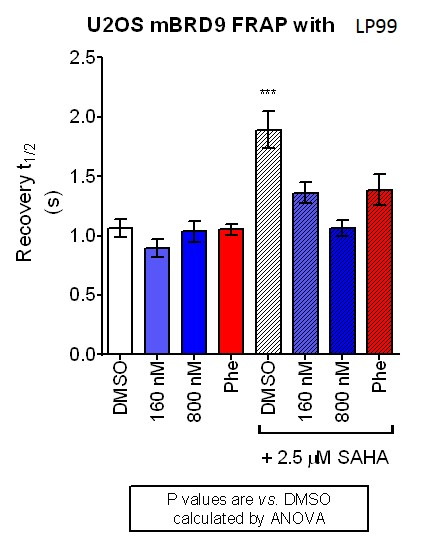
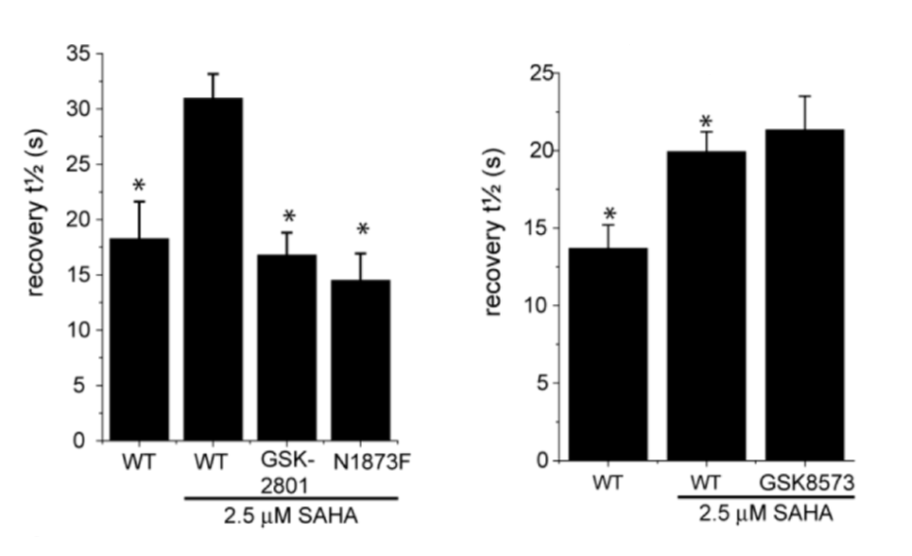
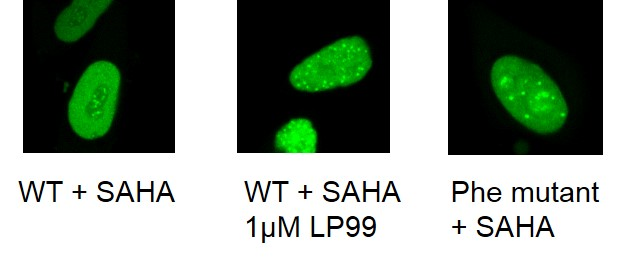
SMARCA2 (Frap Assay)

Accelerated FRAP recovery at 1 uM

SMARCA2 (Frap Assay) *Accelerated FRAP recovery at 1 uM
SMARCA2 (Frap Assay) #Accelerated FRAP recovery at 1 uM

*24 hour compound incubation on cells
^1 hour compound incubation on cells preceded by 24 hour pre-incubation of the compound in medium

references

Selective targeting of the BRG/PB1 bromodomains impairs embryonic and trophoblast stem cell maintenance. Oleg Fedorov, Josefina Castex, Cynthia Tallant, Dafydd R. Owen, Sarah Martin, Matteo Aldeghi, Octovia Monteiro, Panagis Filippakopoulos, Sarah Picaud, John D. Trzupek, Brian S. Gerstenberger, Chas Bountra, Dominica Willmann, Christopher Wells, Martin Philpott, Catherine Rogers, Philip C. Biggin, Paul E. Brennan, Mark E. Bunnage, Roland Schüle, Thomas Günther, Stefan Knapp, Susanne Müller

Science Advances  13 Nov 2015:
Vol. 1, no. 10, e1500723
DOI: 10.1126/sciadv.1500723 

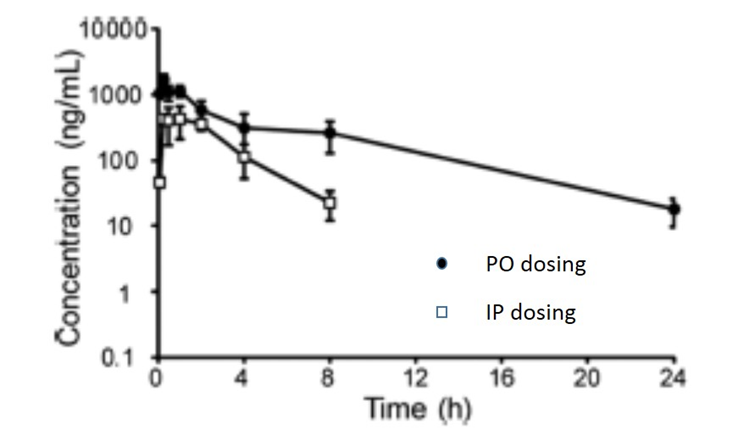
pk properties
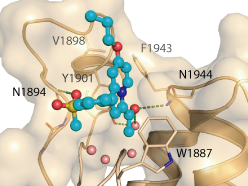
co-crystal structures
synthetic schemes
materials and methods

LLY-507 (multiple off-targets) A chemical probe for SMYD2 protein lysine methyltransferase

This probe is available from Cayman Chemical and Sigma.

overview
Probe Negative control


LLY-507 (IC50 < 15 nM)


SGC705 (IC50> 10,000 nM) 

A collaboration between the SGC and Eli Lilly and Company has resulted in the discovery of LLY-507, a chemical probe for SMYD2 (a protein lysine methyltransferase). LLY-507 is a potent inhibitor of SMYD2 with in vitro IC50 <15 nM and >100-fold selectivity over other methyltransferases and other non-epigenetic targets. LLY-507 has been shown to inhibit p53K370 monomethylation in cells with an IC50 ~600 nM. 

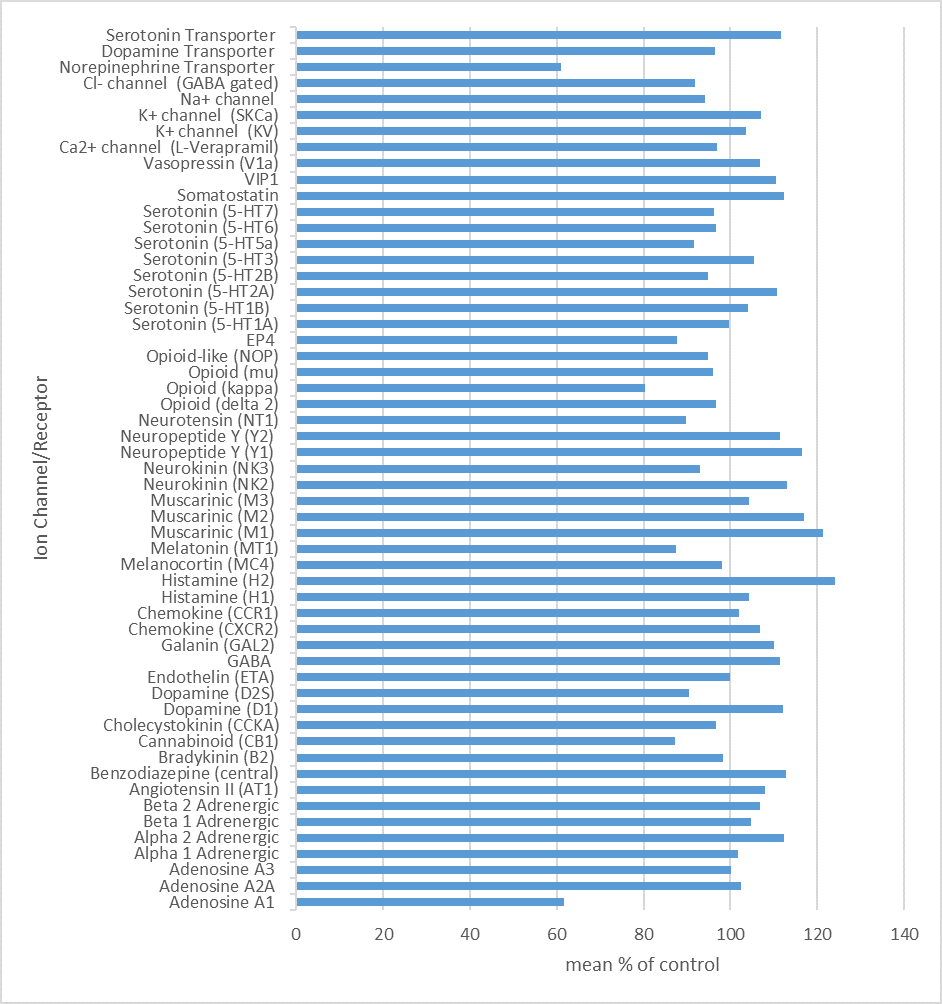
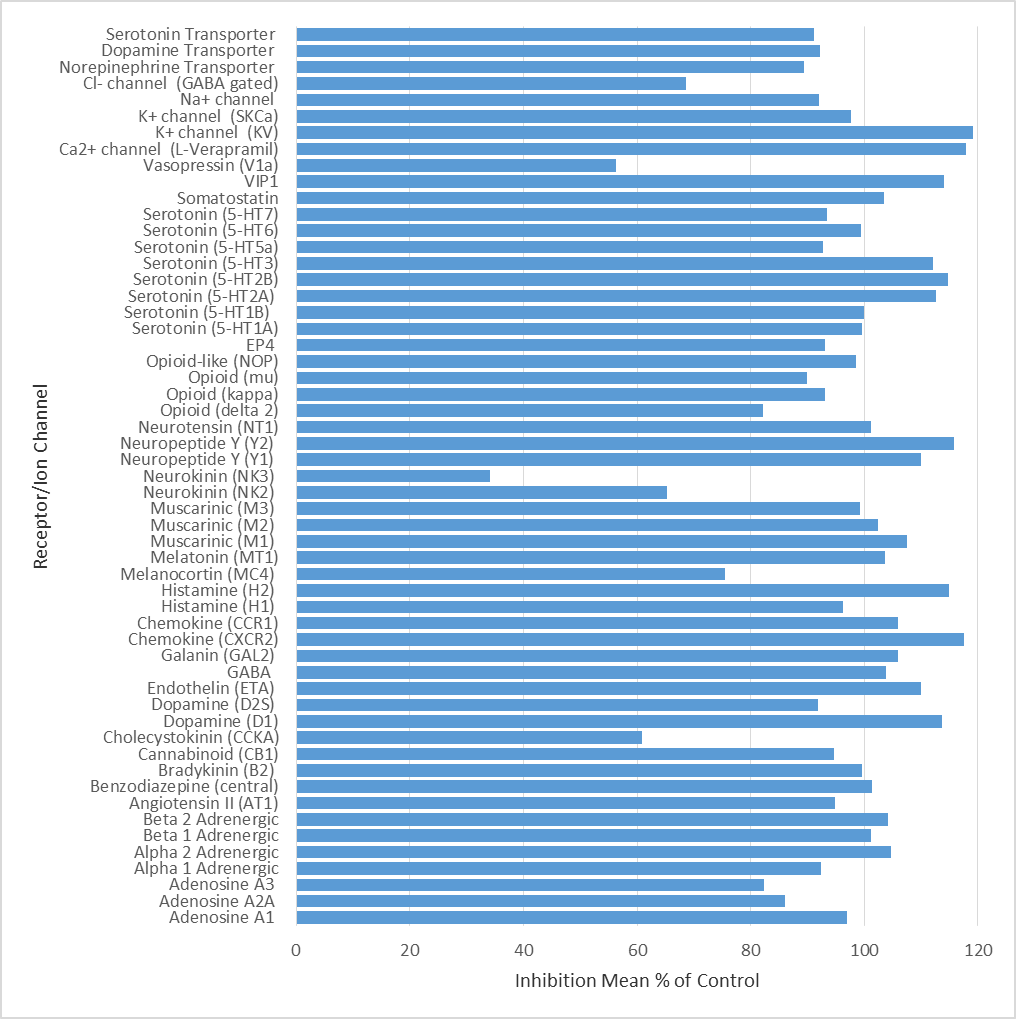
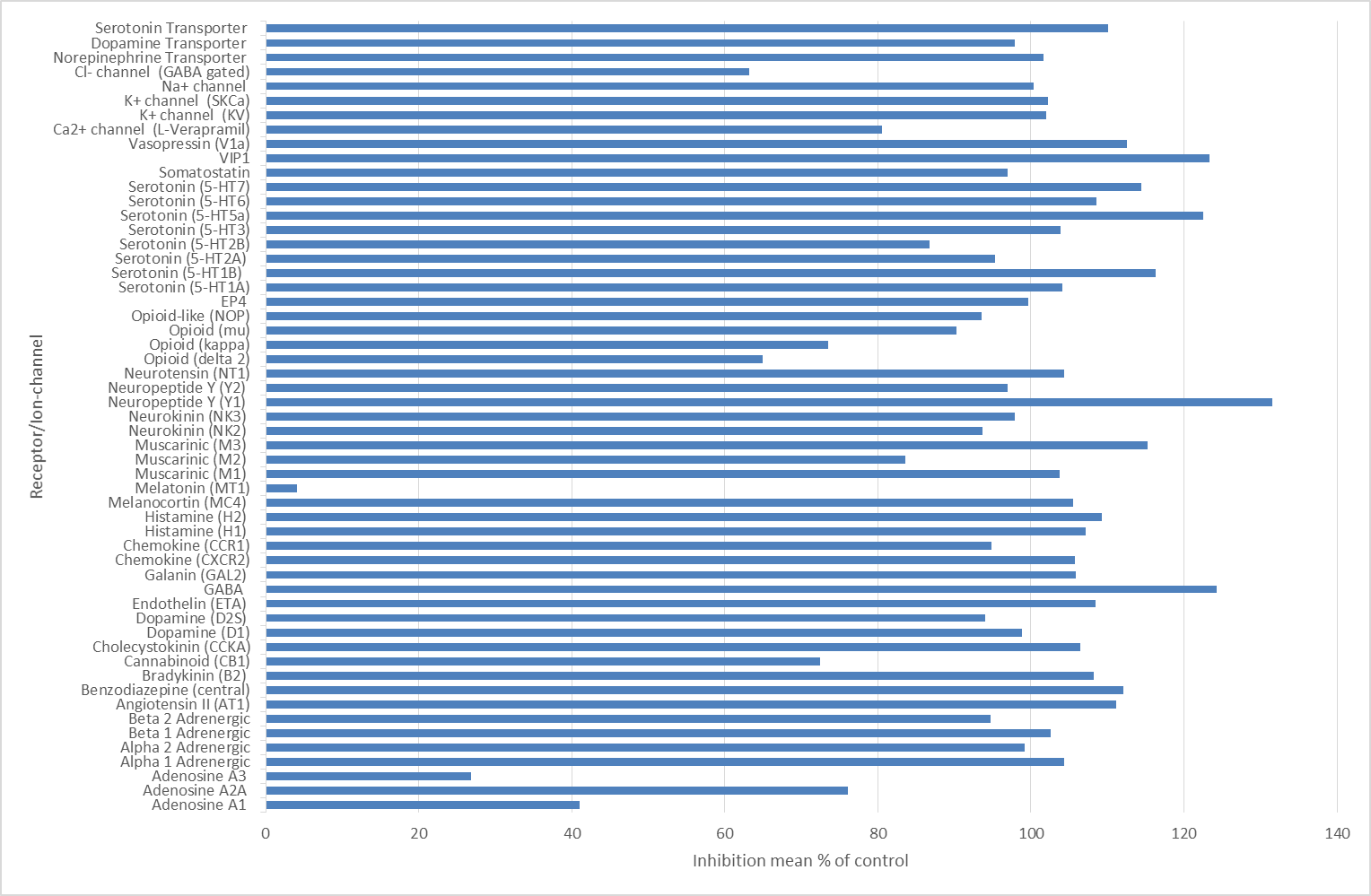
Note: After LLY-507 was released, off-target screening (in addition to those presented in the publication, doi:10.1074/jbc.M114.626861) was done. Here is a copy of the report from a functional screen of LLY-507 and its control SGC705 in the NIMH Psychoactive Drug Screening Program (PDSP). This report clearly shows more than 50% inhibition of a number of targets. 

properties
Probe Negative control


LLY-507 (IC50 < 15 nM)


SGC705 (IC50> 10,000 nM) 

Physical and chemical properties for LLY-507
Molecular weight574.3
Molecular formulaC36H42N6O
IUPAC name5-(2-(4-(2-(9-methyl-7-aza-bicyclo[4.3.0]nona-1(6),2,4,8-tetraen-7-yl)-ethyl)-piperazin-1-yl)-phenyl)-3-((3-(pyrrolidin-1-yl)-propylamino)-formyl)-benzonitrile
MollogP5.891
PSA54.28
No. of chiral centres0
No. of rotatable bonds12
No. of hydrogen bond acceptors5
No. of hydrogen bond donors1
Physical and chemical properties for SGC705 (Negative Control)
Molecular weight573.3
Molecular formulaC37H43N5O
IUPAC name3-((3-cyclopentyl-propylamino)-formyl)-5-(2-(4-(2-(9-methyl-7-aza-bicyclo[4.3.0]nona-1(6),2,4,8-tetraen-7-yl)-ethyl)-piperazin-1-yl)-phenyl)-benzonitrile
MollogP7.504
PSA50.49
No. of chiral centres0
No. of rotatable bonds12
No. of hydrogen bond acceptors4
No. of hydrogen bond donors1
  • SMILES:
  • LLY-507: CC1=CN(C2=C1C=CC=C2)CCN3CCN(C4=CC=CC=C4C5=CC(C(NCCCN6CCCC6)=O)=CC(C#N)=C5)CC3
  • SGC705: CC1=CN(C2=C1C=CC=C2)CCN3CCN(C4=C(C5=CC(C(NCCCC6CCCC6)=O)=CC(C#N)=C5)C=CC=C4)CC3
  • InChI:
  • LLY-507: InChI=1S/C36H42N6O/c1-28-27-42(34-11-4-2-9-32(28)34)22-19-40-17-20-41(21-18-40)35-12-5-3-10-33(35)30-23-29(26-37)24-31(25-30)36(43)38-13-8-16-39-14-6-7-15-39/h2-5,9-12,23-25,27H,6-8,13-22H2,1H3,(H,38,43)
  • SGC705: InChI=1S/C37H43N5O/c1-28-27-42(35-14-6-4-12-33(28)35)22-19-40-17-20-41(21-18-40)36-15-7-5-13-34(36)31-23-30(26-38)24-32(25-31)37(43)39-16-8-11-29-9-2-3-10-29/h4-7,12-15,23-25,27,29H,2-3,8-11,16-22H2,1H3,(H,39,43)
  • InChIKey:
  • LLY-507: PNYRDVBFYVDJJI-UHFFFAOYSA-N
  • SGC705: UZLKKMNSZHUBDI-UHFFFAOYSA-N
selectivity profile

Effect of LLY-507 on the activity of 27 protein methyltransferases as well as DNMT1.

Mechanism of Action

in vitro potency
cell based assay data

Cellular Activity

Dose dependent inhibition of p53 K370 me1 by LLY-507 in KYSE-150 cells stably expressing SMYD2 as measured by a Meso Scale Discovery sandwich ELISA assay (IC50 = 0.6 microM).

references

LLY-507, a Cell-Active, Potent and Selective Inhibitor of Protein Lysine Methyltransferase SMYD2  J. Biol. Chem. doi:10.1074/jbc.M114.626861
Hannah Nguyen, Abdellah Allali-Hassani, Stephen Antonysamy, Shawn Chang, Lisa Hong Chen, Carmen Curtis, Spencer Emtage, Li Fan, Tarun Gheyi, Fengling Li, Shichong Liu, Joseph R. Martin, David Mendel, Jonathan B. Olsen, Laura Pelletier, Tatiana Shatseva, Song Wu, Feiyu Fred Zhang, Cheryl H. Arrowsmith, Peter J. Brown, Robert M. Campbell, Benjamin A. Garcia, Dalia Barsyte-Lovejoy, Mary Mader and Masoud Vedadi.

pk properties
co-crystal structures

Please wait whilst the interactive viewer is loaded!

PDB: 4WUY
Main features

synthetic schemes
materials and methods
25.10.2013

SGC Announces Janssen has joined Public-Private Drug Discovery Partnership

by: SGC

Toronto, ON (October 25, 2013) – The Structural Genomics Consortium (SGC) announced today that Janssen Pharmaceuticals NV has joined its group to partner in the investigation of epigenetics-based drug research, a new and burgeoning field in the development of future medicines.

02.08.2013

Why put science in the public domain?

by: SGC

By Aled Edwards, SGC CEO

At the SGC, we want to help stimulate the discovery of new medicines – yet we explicitly do not file for patents and promptly release information that is customarily kept secret until publication.  How are we helping drug discovery by releasing our information promptly and without restriction?   Patents are the key to protecting a drug’s market rights, and this provides the incentive for drug companies to take big financial risks…so how does making knowledge freely available help pharma?  Isn’t this a non sequitur?

02.08.2013

The launch of the SGC

by: SGC

By Aled Edwards, SGC CEO

02.08.2013

How did the SGC get formed?

by: SGC

By Aled Edwards, SGC CEO

The origins of the Structural Genomics Consortium (SGC) can be traced back to 1999 when Rob Cooke (then at GlaxoWellcome) floated an idea past counterparts in other pharmaceutical companies as to whether a pre-competitive consortium in the field of structural biology was worth establishing. This was inspired by the scientific and organizational success of the SNP consortium (a public-private partnership formed to sequence single nucleotide polymorphisms, and place this information into the public domain, without restriction).

02.08.2013

Biotech and Innovation

by: SGC

The prevailing view in biomedicine and drug discovery is that we need more “innovation”.  

At the SGC, we (narrowly) interpret “innovation” to mean novel targets and mechanisms because we believe this sort of innovation will have the greatest impact on unmet medical needs.

16.07.2013

SGC launches the Structure-guided Drug Discovery Coalition (SDDC) for tuberculosis and malaria

by: SGC

The Structural Genomics Consortium (SGC) recently launched a new scientific public-private partnership in tuberculosis and malaria drug discovery: the Structure-guided Drug Discovery Coalition, SDDC.  Participants to the Coalition include the Seattle Structural Genomics Center for Infectious Disease, the Midwest Center for Structural Genomics, the Center for Structural Genomics of Infectious Diseases, the Tuberculosis Structural Genomics Consortium, leading academic researchers in North America and Europe, and drug discovery teams from academia and industry.

A-366 A chemical Probe for G9a/GLP

This compound is available from SigmaTocris and Cayman Chemical

overview
Probe

A-366

A collaboration between the SGC and Abbvie has resulted in the discovery of A-366, a chemical Probe for G9a/GLP. A-366 is a potent inhibitor of G9a/GLP with IC50 3 nM and > 100-fold selectivity over other methyltransferases and other non-epigenetic targets. A-366 has been shown to inhibit H3K9 methylation in cells with an IC50 of 100 nM and exhibits minimal cellular toxicity compared with previous quinazoline-based probes. 


A recent study by Wagner et al. (PMID: 26893353) showed that A-366 displaces H3K4me3 from Spindlin1 (2nd Tudor domain) with IC50 = 182.6 ± 9.1 nM. 

properties
A-366
5'-Methoxy-6'-[3-(1-pyrrolidinyl)propoxy]spiro[cyclobutane-1,3'-indol]-2'-amine
Physical and chemical properties for A-366
Molecular weight329.2
Molecular formulaC19H27N3O2
IUPAC name5'-Methoxy-6'-[3-(1-pyrrolidinyl)propoxy]spiro[cyclobutane-1,3'-indol]-2'-amine
MollogP3.924
PSA49.37
No. of chiral centres0
No. of rotatable bonds6
No. of hydrogen bond acceptors4
No. of hydrogen bond donors2
  • SMILES:
  • COC1=CC2=C(N=C(N)C23CCC3)C=C1OCCCN4CCCC4
  • InChI:
  • InChI=1S/C19H27N3O2/c1-23-16-12-14-15(21-18(20)19(14)6-4-7-19)13-17(16)24-11-5-10-22-8-2-3-9-22/h12-13H,2-11H2,1H3,(H2,20,21)
  • InChIKey:
  • BKCDJTRMYWSXMC-UHFFFAOYSA-N
selectivity profile

in vitro potency
cell based assay data
references

Discovery and development of potent and selective inhibitors of histone methyltransferase g9aACS Med Chem Lett. 2014 Jan 2;5(2):205-9
Sweis RF, Pliushchev M, Brown PJ, Guo J, Li F, Maag D, Petros AM, Soni NB, Tse C, Vedadi M, Michaelides MR, Chiang GG, Pappano WN. 

The Histone Methyltransferase Inhibitor A-366 Uncovers a Role for G9a/GLP in the Epigenetics of Leukemia. PLoS ONE 10(7): e0131716. doi:10.1371/journal. pone.0131716. William N. Pappano, Jun Guo, Yupeng He, Debra Ferguson, Sujatha Jagadeeswaran, Donald J. Osterling, Wenqing Gao, Julie K. Spence, Marina Pliushchev, Ramzi F. Sweis, Fritz G. Buchanan, Michael R. Michaelides, Alexander R. Shoemaker, Chris Tse, Gary G. Chiang.

Identification of a small-molecule ligand of the epigenetic reader protein Spindlin1 via a versatile screening platform. Nucleic Acids Res. 2016 Feb 17.
Wagner T, Greschik H, Burgahn T, Schmidtkunz K, Schott AK, McMillan J, Baranauskienė L, Xiong Y, Fedorov O, Jin J, Oppermann U, Matulis D,Schüle R, Jung M.

pk properties
co-crystal structures

Please wait whilst the interactive viewer is loaded!


Main features

synthetic schemes
materials and methods