28.09.2011

International Structural Genomics Consortium Announces $48.9 Million in Additional Funding to Continue the Search for New Medicines

by: SGC

London, September 28, 2011 - The international Structural Genomics Consortium (SGC) today announced $48.9 million in new funding has been attained. This renewed investment will allow the SGC to further develop its open access research program to support drug discovery and the development of new medicines.  The announcement comes as the SGC on June 30 successfully completed its second phase of funding (2007-2011).

28.09.2011

The Drug Discovery Unit at the University of Dundee identifies new N-myristoyltransferase inhibitors as leads to treat sleeping sickness

by: SGC

"Sleeping sickness", also known as human African trypanosomiasis, is responsible for approximately 30,000 deaths each year and 70 million people are at risk of infection, as estimated by the World Health Organization. The parasite that causes this disease is predominantly found in the developing world, and - like many other ‘neglected diseases’ - there is a shortage of inexpensive, efficacious drugs available to combat this illness.

28.09.2011

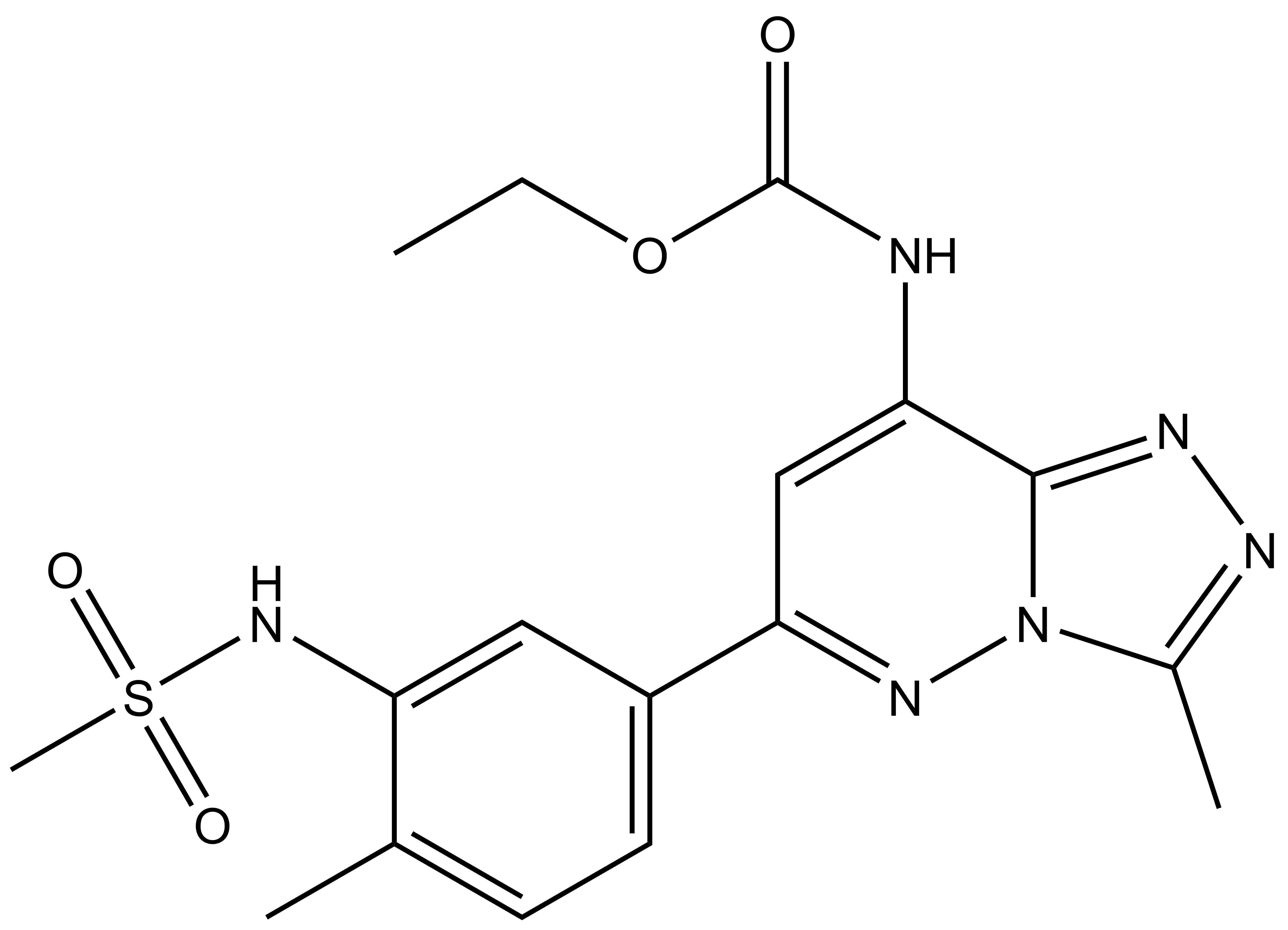
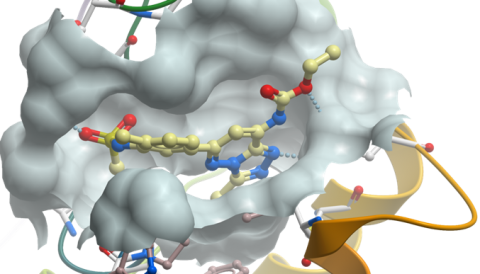
Small molecule compound used to probe into the role of Mps1

by: SGC

The successful segregation of chromosomes in mitosis requires the timely coordination of cell cycle events to ensure the bipo¬lar attachment of sister chromatids via their kinetochores to the mitotic spindle before the initiation of anaphase. Deregulation of this process or uncoupling of its component parts can lead to aneuploidy and chromosomal instability (CIN), which are recog¬nized hallmarks of cancer.

28.09.2011

Opening the gates for a new therapeutic opportunity in the fight against apicomplexan parasites

by: SGC

Apicomplexan parasites are a diverse group of protozoan parasites, several of which cause important human and animal diseases, such as malaria, cryptosporidiosis and toxoplasmosis. Many of these diseases are endemic in developing countries, which are impacted by the lack of cost-efficient treatments. Cryptosporidiosis and toxoplasmosis can also be life-threatening to immunocompromised individuals, e.g. those undergoing organ transplantation or chemotherapy and HIV/AIDS patients, who cannot fight back the infection and are thus dependent on drugs to kill the parasites.

28.09.2011

New drug leads to treat toxoplasmosis unveiled by collaboration between Washington University, UCSF and the SGC

by: SGC

Toxoplasmosis is a parasitic disease caused by the apicomplexan protozoa Toxoplasma gondii and can pose a significant threat to immunocompromised individuals, e.g. those undergoing organ transplantation or chemotherapy and HIV/AIDS patients, who cannot fight back the infection and are thus dependent on drugs to control the infection.

28.09.2011

SGC joins European Union Framework Programme 7 grant on Affinomics.

by: SGC

The SGC has been awarded more than 0.5 M Euro as part of a joint EU FP7 -Health grant: 'Protein Binders for Characterisation of Human Proteome Function: Generation, Validation, Application "Affinomics", which encompasses 15 participant labs in eight different European countries for 5 years.

28.09.2011

PLoS Biology and MCP adopt iSee to enhance articles with interactive 3D molecular graphics

by: SGC

Two influential journals are now accepting and publishing articles that are enhanced using a unique platform known as iSee (interactive Structurally enhanced experience), developed in a collaboration between the SGC's Dr. Brian Marsden and Dr. Wen Hwa Lee, with Prof. Ruben Abagyan and his team from MolSoft L.L.C.

28.09.2011

Structural Genomics Consortium releases 1000th protein structure.

by: SGC

The Structural Genomics Consortium (SGC), an international public-private partnership that aims to determine three dimensional structures of medically important proteins, announced today the release into the public domain of its 1000th high resolution protein structure.

28.09.2011

Genetic and Structural Studies Highlight Novel Key Factors in Autoimmune Diseases

by: SGC

A research team led by scientists from Oxford University (including the Structural Genomics Consortium, the Botnar Research Centre, the Weatherall Institute of Molecular Medicine, the Wellcome Building for Molecular Physiology, and the australian Diamantina Institute in Brisbane), have successfully deciphered the molecular mechanism how an ER protease (ERAP1) functions in a key step in cellular immunity- the processing of peptide antigens that are presented to Major Histocompatibilty Complex 1 (MHC1) molecules.

28.09.2011

Interactive 3D visualisations of biological molecules to aid the study of inborn errors of metabolism.

by: SGC

An intuitive and interactive tool to understand the structure of important biological macromolecules is now available for the readers of the Journal of Inherited Metabolic Disease (JIMD), the leading international journal covering all aspects of inborn errors of metabolism. Called iSee (for Interactive Structural Enhanced Experience), this molecular graphics tool will allow the readers to interactively fly over, zoom into and dive through 3D visualisations in atomic detail.